

The Ancient and Accepted Rite (Rose Croix)
The Ancient and Accepted Rite originated in France in 1754 and worked in the USA where a Supreme Council was formed in 1801.
The Supreme Council for England and Wales was established in 1845 under a patent from the Supreme Council of the Northern Masonic Jurisdiction of the United States of America. The Rite consists of its own 33 Degrees entirely separate and distinct from any other Order.
The three Craft Degrees are accepted as equivalent to the first three Degrees of this Rite. Candidates for Perfection are taken from the 4º to 17º Degrees by name only, prior to being made Excellent and Perfect Princes Rose Croix in a detailed and beautiful 18º Degree ceremony. This is the only degree permitted to be worked in a private Rose Croix Chapter. Degrees above the 18º are awarded on merit after a brother has passed the Chair of his Chapter.
For more information on the Order of The Ancient and Accepted Rite, please contact the District Recorder: Chris Callow or click on the link to the WILTSHIRE ROSE CROIX website.

CLICK ON THE IMAGE TO LEARN MORE
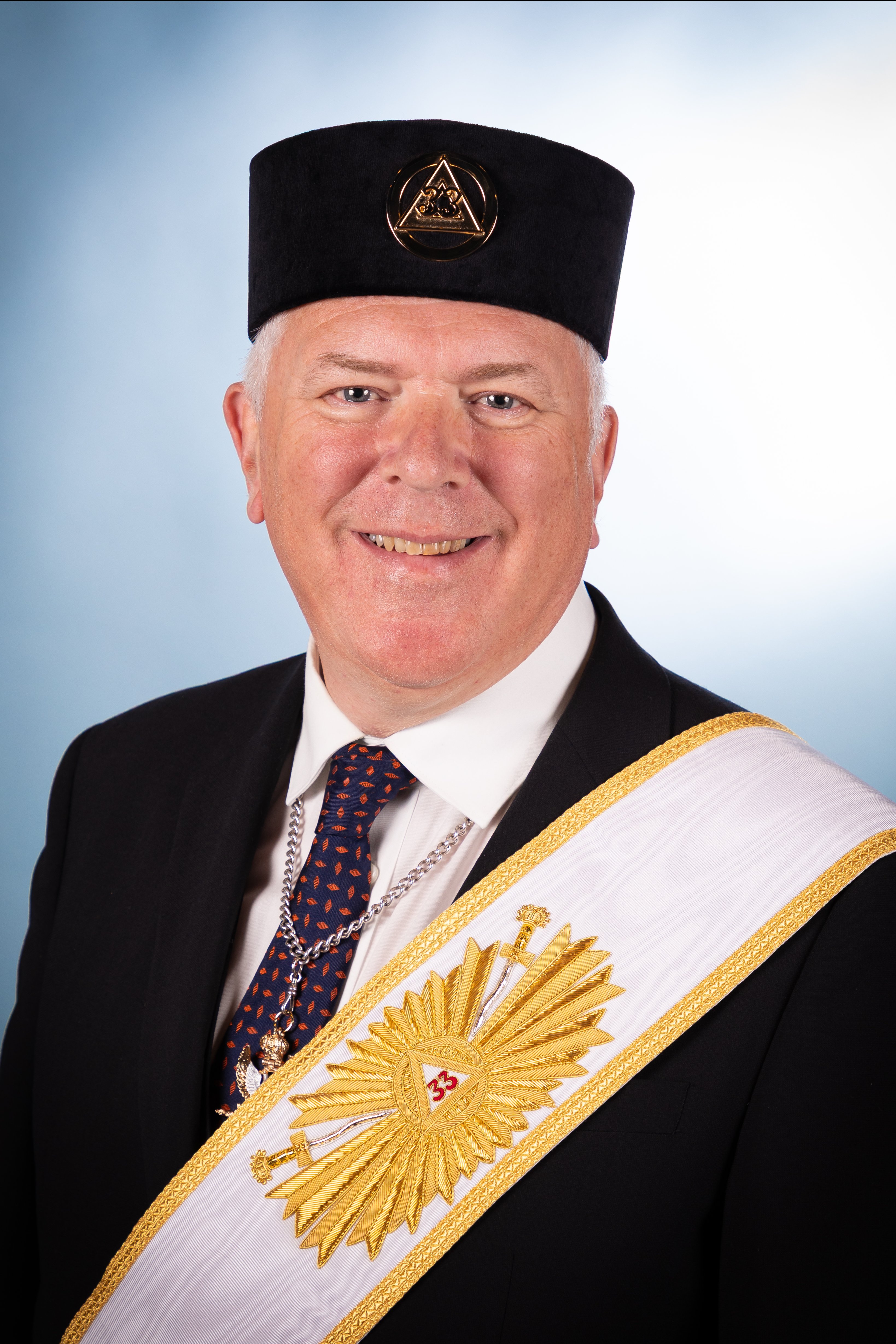
V∴Ill∴Bro. Richard Legge 33° - Inspector General - District of Wiltshire
The head of The Ancient And Accepted Rite (Rose Croix) in the District of Wiltshire is Richard Legge.
Richard Legge has built a life centred on service, family and quiet leadership. From his early days in Swindon to a long career supporting others in healthcare and global leadership development, his path has always reflected patience, steadiness and a genuine care for people.
His Masonic journey is much the same, shaped by years of thoughtful work across Craft, Royal Arch and the Rose Croix, and by the countless brethren he has encouraged along the way. As he begins his role as Inspector General for Wiltshire, Richard brings together a lifetime of experience, a deep love of the Province, and a sincere desire to help others grow within the Rite.
Before anything else, Richard is a servant of the District of Wiltshire. His appointment as Inspector General reflects not status or rank, but a natural continuation of a lifetime spent supporting Lodges, Chapters and individual brethren with patience, clarity and genuine warmth.
This page offers an introduction to the experiences, values and journey that have shaped his approach to leadership within the Rose Croix, a path grounded in service, informed by professional life and Masonic involvement, and guided by a genuine concern for the wellbeing and development of others.
Before anything else, Richard is a servant of the District of Wiltshire. His appointment as Inspector General reflects not status or rank, but a natural continuation of a lifetime spent supporting Lodges, Chapters and individual brethren with patience, clarity and genuine warmth. A path grounded in service, informed by professional life and Masonic involvement, and guided by a genuine concern for the wellbeing and development of others.
What follows is not a list of offices held, but a reflection on the people, experiences and principles that continue to inform his work: a calm, inclusive style of leadership; a belief in collaboration and shared purpose; and a commitment to helping brethren explore the Rite at a pace and depth that is right for them. Above all, it reflects a desire to serve the District by strengthening Chapters and creating an environment in which members feel welcomed, supported and inspired in their journey through the Rose Croix.
His appointment as Inspector General reflects not status, but a natural continuation of the steady, supportive roles he has carried throughout his Masonic journey.
His path to becoming Inspector General reflects a lifetime of service, both inside and outside masonry, shaped by professionalism, humility and a genuine interest in the wellbeing of others.
Richard grew up in Swindon as one of four brothers and began his working life in healthcare, qualifying as a Diagnostic Radiographer in 1985. His early career took him to the Royal Berkshire, Battle Hospital and later the John Radcliffe in Oxford, where he specialised in CT and angiocardography and eventually managed the angiography laboratories. These roles demanded clarity under pressure, attention to detail and the ability to support people at difficult moments, qualities that have stayed with him throughout his life.
A move into the pharmaceutical and medical-devices industries led Richard into training, coaching and leadership development. What started as a new direction soon became a genuine passion. Over the years he held senior roles in training, business leadership and organisational development, completing an Executive MBA at the University of Bath along the way. Today he serves as Global Leadership Development Director for a global medical products and technologies company, working with senior leaders and high-potential teams across an international organisation. His work is rooted in developing people, listening carefully, and helping others reach their potential, skills that sit naturally alongside the ethos of the Ancient & Accepted Rite.
Rose Croix
As the craft degrees have evolved, so too have independent Orders of Freemasonry and rituals peculiar to them.
It chooses to accept the three craft degrees of UGLE as a qualification for entry into a Chapter, rather than administering entry degrees of its own. Progression to further degrees is then within Chapters, and in ceremonies generally conducted by the Supreme Council itself.
The Rite is frequently referred to as the 'Rose Croix', although this is only one of its degrees.
All candidates for membership of the Ancient and Accepted Rite under the jurisdiction of the Supreme Council for England and Wales and have been Master Masons for at least one year in UGLE, or have joined a Lodge under UGLE from a recognised Grand Lodge.

